
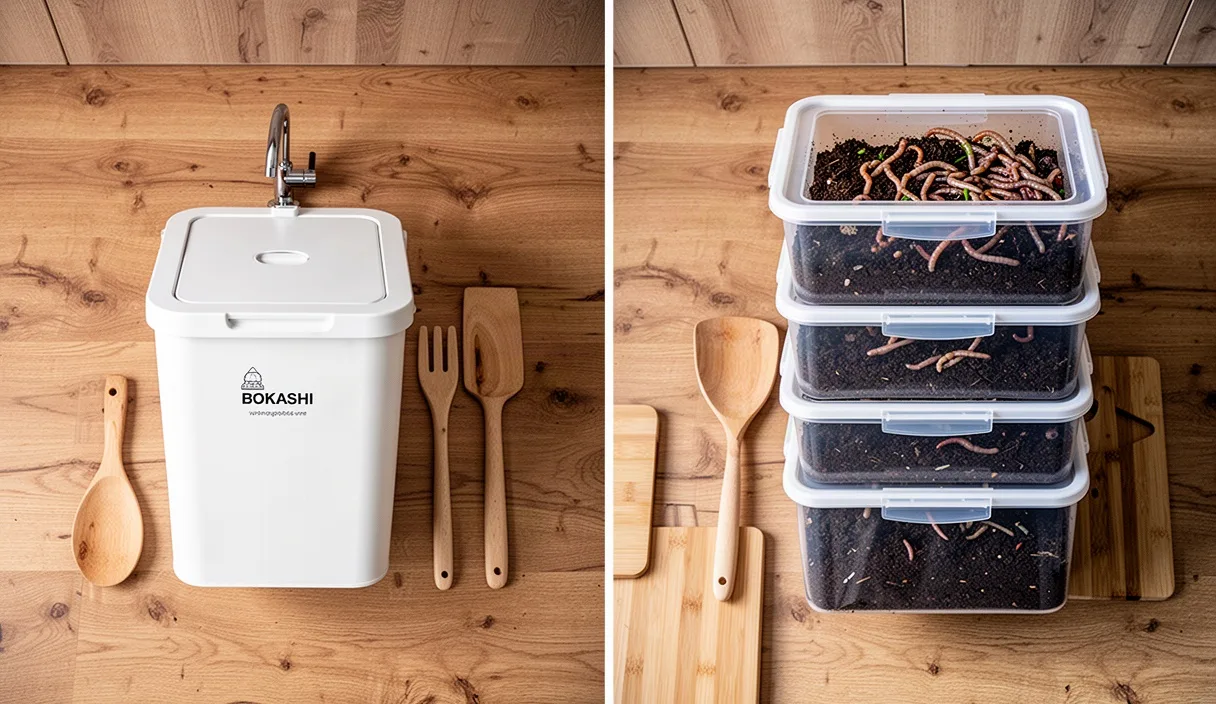

Carrying a bag of wet kitchen scraps down three flights of stairs to an overflowing municipal dumpster is a routine that wears thin quickly. For apartment dwellers who want to reduce landfill waste, indoor composting feels like the obvious alternative, until the realities of limited floor space, sensitive roommates, and zero yard access set in. Traditional backyard hot composting is out of the question in a compact apartment, leaving two functional, contained methods: anaerobic fermentation with a bokashi bucket, or biological processing with a vermicomposting worm bin.
Both systems turn food scraps into valuable soil amendments without requiring an outdoor compost pile, but they operate on fundamentally opposite biological rules. One pickles your waste in a sealed, airless container using inoculated bran, while the other relies on several hundred living organisms chewing through moist bedding in an oxygen-rich environment. Choosing the right one comes down to what you eat, how much square footage you can sacrifice, and what you plan to do with the byproduct when the container fills up.
How anaerobic fermentation differs from worm digestion
The primary difference between bokashi and vermicomposting lies in the presence of oxygen. Bokashi is an anaerobic fermentation process developed in Japan. Scraps are packed tightly into an airtight bucket and inoculated with carrier material, usually wheat bran or sawdust, coated with Effective Microorganisms. This blend contains lactic acid bacteria, yeasts, and photosynthetic bacteria. Instead of breaking food down into crumbly dark soil, bokashi pickles the food, lowering the internal pH to between 3.5 and 4.0. The cellular structure softens, pathogens die off, and the scraps become preserved, retaining their original colors and shapes until buried in living soil.
Worm composting is an aerobic system driven by red wiggler worms, scientifically known as Eisenia fetida. These worms live alongside beneficial aerobic bacteria, fungi, and protozoa inside a ventilated bin. The worms do not have teeth; they consume decaying organic matter and the microbes coating it, passing the material through their digestive tracts. The end result is worm castings, a dark, granular substance rich in plant-available nitrogen, phosphorus, and humic acids. This system requires constant oxygen circulation and a neutral pH balance between 6.5 and 7.2 to keep the worms healthy and active.
| Feature | Bokashi Bucket | Worm Bin (Vermicomposting) |
|---|---|---|
| Biological Environment | Anaerobic (strictly no oxygen) | Aerobic (constant airflow required) |
| Active Agents | Lactic acid bacteria, yeasts, microbes | Eisenia fetida worms and aerobic bacteria |
| Internal pH | Acidic (3.5 to 4.0) | Near-neutral (6.5 to 7.2) |
| Finished Output | Fermented pre-compost and acidic liquid | Finished worm castings and microbial residue |
| Process Speed | 14 days to fill, 14 days to ferment | Continuous; castings harvested every 3 to 5 months |
Because these biological engines are so different, their management strategies cannot overlap. Introducing oxygen to a bokashi bin causes the contents to rot instead of ferment. Conversely, starving a worm bin of oxygen suffocates the worms and turns the bedding into a foul, anaerobic sludge. Understanding this distinction prevents the most frustrating indoor composting disasters.
Space requirements and daily maintenance rhythms
In a small apartment, every square foot must justify its existence. A standard bokashi setup takes up remarkably little real estate. The typical bucket holds roughly 5 gallons (19 liters) and has a footprint measuring about 12 inches by 12 inches, with a height of 16 to 18 inches. It fits neatly under a standard kitchen sink, inside a deep pantry cabinet, or in a utility closet. Because the lid must remain locked tight, the daily routine involves collecting food scraps on the counter in a small bowl throughout the day, opening the bucket once in the evening, pressing the scraps down firmly to push out air, sprinkling a tablespoon of bran over the layer, and clamping the lid back down.
Worm bins require slightly more breathing room and environmental awareness. Worms thrive in temperatures between 55 and 77 degrees Fahrenheit (13 to 25 degrees Celsius). If your apartment tends to heat up past 84 degrees in the summer, an under-sink worm bin can easily overheat. A standard two-tote DIY worm bin or a commercial stacked-tray system measures roughly 16 inches wide by 24 inches long and 15 inches tall. While it can live in a closet or hallway corner, it needs air vents, meaning you cannot stack storage boxes directly on top of it or shove it into an unventilated storage ottoman.
The feeding rhythm for worms is slower and less rigid than bokashi. Red wigglers do not need daily attention. Feeding them once or twice a week is ideal. You gently pull back the top layer of damp bedding, bury the weekly scraps in a designated quadrant of the bin, and cover them completely with shredded cardboard or newspaper to deter fruit flies. Worms do not care about your weekend plans, but they do insist on a dark, quiet environment with minimal vibration, so keeping the bin right next to an unbalanced washing machine or a subwoofer is not recommended.
Handling restricted kitchen wastes: dairy, meat, and peels
Your weekly cooking habits should heavily influence your choice between these two systems. If your household prepares raw poultry, consumes fish, or frequently discards cheese rinds, bokashi is substantially more forgiving.
What the Bokashi Bucket Handles
The lactic fermentation process halts decay, which means you can safely add items that would ruin a traditional compost pile:
- Cooked leftovers, including pasta tossed in oil and stir-fries
- Cheese rinds, spoiled yogurt, and small amounts of butter
- Meat trimmings, bacon fat, and soft chicken bones
- Citrus rinds, raw onions, shallots, and spicy pepper seeds
- Coffee grounds, tea leaves, and stale bread
The only strict bans for bokashi are excessive liquids (like cartons of spoiled milk or watery soups), large hard bones that will not break down later in soil, and food that is already visibly coated in green or black mold, which can outcompete the beneficial bacteria.
What the Worm Bin Requires
Worm bins are built around a living ecosystem of soft-bodied creatures that absorb moisture and air through their skin. Highly acidic, oily, or pungent foods irritate their bodies and can drive them to attempt a mass escape along the bin rim. A worm diet should consist primarily of neutral vegetable scraps, crushed eggshells, and damp carbon.
- Safe worm foods: Lettuce, cucumber, zucchini, squash trimmings, non-acidic fruit scraps, carrot peelings, and moist coffee grounds in moderation.
- Restricted foods: Citrus rinds, pineapple cores, onions, garlic, and hot chili peppers. These lower the pH and contain natural compounds that burn worm skin.
- Forbidden foods: Meat, poultry, seafood, dairy products, and grease. These inputs will not directly poison the worms, but they decay slowly, generating severe odors, attracting rodents, and inviting black soldier fly infestations inside your home.
Odor management and leachate drainage
The fear of bad smells is the single largest hurdle for apartment composters. Both systems are practically odorless when run correctly, but their failure modes smell very different.
A healthy bokashi bucket produces a distinct pickling scent when opened: sour, yeasty, and resembling cider vinegar or apple beer. It is noticeable while the lid is off, but it dissipates within a minute after the lid is clamped shut. However, bokashi creates liquid as the cell walls of fermenting scraps rupture. This liquid collects at the bottom of the bucket beneath a drainage grate. You must draw this liquid off every 2 to 4 days using the integrated spigot. If you leave the liquid sitting, it turns putrid and will overwhelm the fermentation, converting the bucket into an anaerobic sewer. The drained liquid, often called bokashi tea, carries a sharp pickled scent and should be diluted promptly for houseplants or poured down household drains to clear microbial scum.
A balanced worm bin smells like damp woodland soil or fresh rain on a forest path. You should be able to lift the lid in your living room without detecting any sourness. If your worm bin smells like sulfur or garbage, three specific balance issues are usually at play: the bin is too wet, you have buried more food than the worms can process in seven days, or the scraps have become compacted without enough shredded paper. Worm bins produce very little liquid when maintained with adequate dry carbon. If liquid is steadily dripping from the base tray into your catch pan, your bedding is overly saturated, cutting off oxygen and risking worm mortality.
What to do with the finished product without a garden
Filling the container is only the halfway mark. Managing the finished output inside an apartment without outdoor garden beds requires a concrete plan before you start.
Handling Bokashi Pre-Compost
When your bokashi bucket is full, you seal it for 14 days to complete the fermentation. When opened, the food looks structurally intact, but it is deeply pickled. You cannot use it directly in houseplant pots; its high acidity and active microbes will burn plant roots. To finish the process, the fermented mass must spend two to four weeks in contact with soil microbes. Apartment dwellers without backyards manage this in three reliable ways:
- Build a balcony soil factory: Mix the fermented scraps thoroughly in a 20-gallon storage tote with equal parts used potting soil. Cover the mixture with a four-inch layer of clean soil on top to seal off smells. Within three to four weeks, the pickled scraps disappear into rich potting loam.
- Donate via community boards: Community gardens, urban farms, and neighbors found on community mapping apps are often eager to receive bokashi buckets because the pre-compost breaks down rapidly when dug into their outdoor garden trenches.
- Use municipal collection programs: Many city drop-off programs accept fermented bokashi blocks even if they ban fresh home food waste, as the fermentation prevents pest attraction at the collection depot.
Harvesting and Using Worm Castings
Vermicomposting creates a ready-to-use product that requires no secondary curing. Every three to five months, you can harvest the dark, crumbly castings from your bin using the "light method": empty the bin contents into small cones under a bright desk lamp. Because worms flee from light, they burrow to the bottom of the piles, allowing you to scrape the finished castings off the top layer by layer.
Castings are gentle, odorless, and cannot burn plants. You can blend one part worm castings with four parts standard indoor potting soil for repotting, or scatter a half-inch layer over the surface of your indoor houseplant pots twice a year as a slow-release biological fertilizer.
Common mistakes to avoid
Most failures with indoor composting stem from simple setup errors rather than bad luck. Avoiding these specific missteps will keep your apartment clean and pest-free.
- Opening the bokashi bin too frequently: Opening the bucket multiple times a day introduces fresh oxygen, disrupting the lactic acid bacteria and encouraging white or green surface molds. Keep a scrap collector on the counter and transfer everything in one daily batch.
- Skimping on bokashi bran: Adding too little bran is the main cause of failed fermentation. Use roughly one tablespoon per cup of food scraps, and double the amount for meat, bones, or dairy.
- Neglecting worm bedding volume: A worm bin should be approximately 75 percent bedding by volume. If you drop scraps directly onto bare worms without burying them under fresh, damp shredded cardboard, moisture will build up and fruit flies will move in.
- Overfeeding a young worm population: One pound of red wigglers (roughly 1,000 worms) needs time to adapt to a new bin. Feed them only a cup or two of chopped scraps during their first week, increasing food volume only after they have visibly cleared the previous ration.
- Ignoring moisture levels: Worm bedding should feel like a well wrung-out kitchen sponge. If a handful of bedding drips water when squeezed gently, it is too wet; add dry shredded paper immediately.
Practical next steps
To decide which system matches your home, track your kitchen waste over the next seven days without changing your cooking habits. Note down the proportion of raw vegetable trimmings versus cooked scraps, sauces, dairy, and meat. If your scrap bowl is dominated by vegetable ends, coffee grounds, and fruit rinds, and your main goal is nourishing a collection of houseplants, order a starter kit with one pound of Eisenia fetida worms and begin shredding brown delivery boxes for bedding.
If your cooking produces a wide variety of mixed leftovers, citrus skins, animal proteins, and cheese trimmings, a two-bucket bokashi rotation is the practical choice. Buy two 5-gallon airtight buckets fitted with spigots and a bag of microbial bran. While one bucket rests sealed for its two-week fermentation window, the second bucket collects your daily kitchen output, providing an unbroken, compact waste management system that fits comfortably beneath your kitchen pipes.